Motion With Ease: How Backer #54 @Kirthnoel Put Spark to Work in 4K High-Speed Motion Control

Pixboom
·2026-07-29
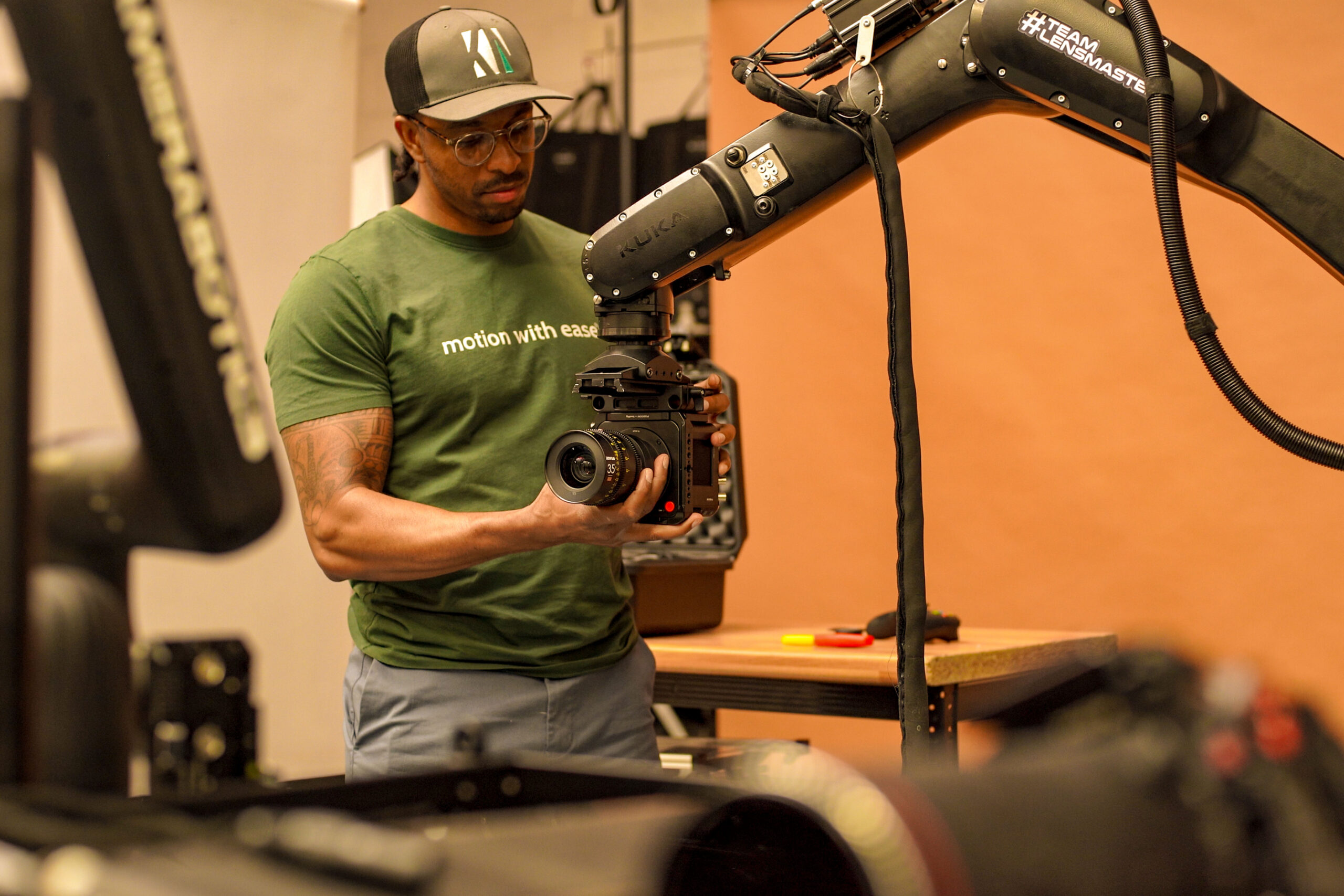
Visual Engineering Studio @Kirthnoel
There’s a moment at every trade show where you either take the leap or you don’t. For the owner of a UK studio built around visual engineering and motion control, that moment came at IBC — standing next to the Spark, listening to another filmmaker ask the team every question he’d been too unsure to ask himself. He heard the answers. He walked away, and he backed the Kickstarter. Number 54.
He’d never shot a frame on the camera. He didn’t need to. “For that price point,” he says, “it was the easiest decision to make.”
Months later, after a run of studio test shoots, this is what that bet looks like from the inside — in his words, on his rig, at 4K and 887 frames per second.
Three Years, From Corporate Video to a Robot Arm
His path into high-speed wasn’t a straight line. Covid was the pivot — the point where corporate video work gave way to tabletop and product films, which escalated into visual engineering, and eventually into motion control. Along the way, one thing stayed constant: high-speed is not a garnish on this kind of work. It’s the whole point.
“High-speed filming is an integral element when it comes to product storytelling. Just to get those smooth, nicely spectacular shots that we’re looking for.”
Everything, he’ll tell you, looks better in slow motion — and for product storytelling, slow motion is a staple, not a special. The wow of a splash, the physics of a powder burst, the way liquid behaves when time slows down: that’s where the sense of quality and opulence comes from. So when he started this journey, he invested in a high-speed camera the way another studio might invest in a lens set. It’s core kit.
The Camera He Couldn’t Justify
For years, his go-to was a Chronos HD 2.1 — 1080p at 1000fps. A great proof-of-concept tool: fast, honest, perfect for R&D and for seeing what a shot looks like at a thousand frames before committing a client budget to it. When a job needed a higher-end finish and the budget was there, he’d hire in a bigger camera to deliver the final. That was the compromise, and everyone in this corner of the industry knows it well.
The obvious upgrade was the one nobody in this bracket can actually reach. The Phantom — the Holy Grail, in his words — sat permanently out of range on price. His natural step up would have been a Chronos 4K, but even that didn’t move him — he wasn’t amazed by certain elements of it, and the form factor never felt cinematic. A Chronos 12K or an Ember meant paying considerably, considerably more. So he did what a lot of high-speed shooters have quietly been doing for years. He waited. He held out to see what would come onto the market.
Then Spark appeared.
Why He Backed a Camera He’d Never Shot
Two things tipped him, and only one of them was a spec sheet.
The first was character. He describes himself, plainly, as a believer in underdogs — people with an idea, going for it anyway. The innovative way the camera was built and sold spoke to the same instinct that made him build a studio around a niche most people find intimidating. The second was the number. Spark landed priced at or below the competitors he’d been pricing out for years, which turned a daunting decision into a low-risk one.
“I am going to take a risk and back the Kickstarter. And if I’m wrong, then I’m wrong. But for that price point, it was the easiest decision to make at that time.”
What sealed it was IBC. Seeing the camera in person, and — more than that — standing beside someone who grilled the team with exactly the questions he had about his own use case, and hearing real answers. That was the confidence. He backed it without ever using it, and waited for it to land.
The Thing That Changed: 4K, Finally
Most of his deliverables go out in 4K. That single fact was the crack in his old workflow. With the Chronos HD topping out at 1080p, a project would end up half 4K — shot on a 4K, 25fps camera — and half compromised down to 1080p wherever the high-speed lived. Two resolutions in one film, and a compromise the client never asked for but always got.
“Now I can deliver all of my images in 4K, which is key. It’s quite vital to the quality of image that I’m actually delivering to my clients.”
And he wasn’t willing to cheat his way there. Faking high-speed in post — interpolating frames to invent slow motion — was never on the table. “I’d rather have a lower resolution and the proper frame rate,” he says. The point of a real high-speed camera is that the frames are real. Spark let him stop choosing between resolution and truth.
Less Light, More Freedom
High-speed has always been a lighting problem. More frames per second means less light per frame, which is why traditional high-speed shoots look like someone tried to build a small sun in the studio. Spark’s BSI sensor rewrites that math. For his test shoots, the whole thing was lit by a single Godox MG1200 — one 1200W LED as key — plus a diffused back spotlight for contrast. The subject was near-white, so the challenge was actually holding it back from blowing out, not chasing exposure.
“It requires considerably less lighting to be able to shoot that same image.”
Then there was the surprise he didn’t buy the camera for: form factor. His old camera had no external battery option — mains power, or a proprietary system that wasn’t great — which meant it lived tethered to the rig. Spark’s integrated V-mount changes the geography of a shoot.
“Now I can confidently remove this camera from my setup rig and just take it outside and start shooting, easily.”
A camera that can leave the studio is a camera that can take on work the old one physically couldn’t. That’s not a spec. That’s a bigger business.
Record Until You’ve Got It
His previous camera recorded to a buffer: five seconds, and everything had to happen inside it. In controlled motion-control work, that’s survivable — most high-speed moves are under five seconds, and you know exactly when the action happens. But survivable is not the same as free.
“I was able to press the record button, run the move, stop the robot and stop the recording — without fear of losing any footage that you’d normally get on a buffer system.”
On his robot rig, he simply rolled for as long as he needed. No countdown, no buffer roulette, no move sacrificed to a clip limit. And while he’s candid that a fully controlled tabletop scene doesn’t strictly need unlimited recording — there’s no unpredictable moment to wait for the way there is in sport or wildlife — he’s clear about what it unlocks next. Now that the camera can go outside, the use cases that do need it are suddenly on the table.
The Setup, In His Words
For the test, he pushed resolution first, then found the frame rate. He settled on 4K at around 887fps — maxed for the resolution, and, in his judgement, “about right.” From there the shoot ran. One key light, one back light, a white-ish subject dialled back so it wouldn’t clip, and an image he describes simply: really good, really nice in the end.
The part his audience reacted to wasn’t just the slow motion — it was the movement. There’s high-speed filming, and then there’s dynamic high-speed: the camera itself moving fast through the scene while the action happens, foreground and background sliding into parallax at a thousand-frame crawl. His motion-control rig does the action and the camera move together, and the whole environment bends around the subject.
“We had the action happening and the camera moving around, creating that parallax in high speed as well. That was pretty cool for people to see.”
A Power User Builds the Rest Himself
This is the part that tells you what kind of owner Spark attracts. He didn’t wait for the camera to be perfect — he engineered around it, and in doing so mapped the exact roadmap that makes it better for the next motion-control shooter.
Take triggering. Motion-control workflow has one golden rule: you don’t touch the camera. You press go, the rig starts recording, runs the move, and stops the recording at the end — no human hands, no wasted SSD. Spark has a nine-pin external port for exactly this, but it didn’t ship with an extension cable, so he sourced the right LEMO connector and built his own run/stop cable solution. He already has a trigger cable with the correct output; wired triggering into the software isn’t implemented yet, and he’s been talking to the Pixboom team, who are working on it. His take on the DIY part is generous, not grumbling — he plans to just send the next filmmaker a link to the cable that works.
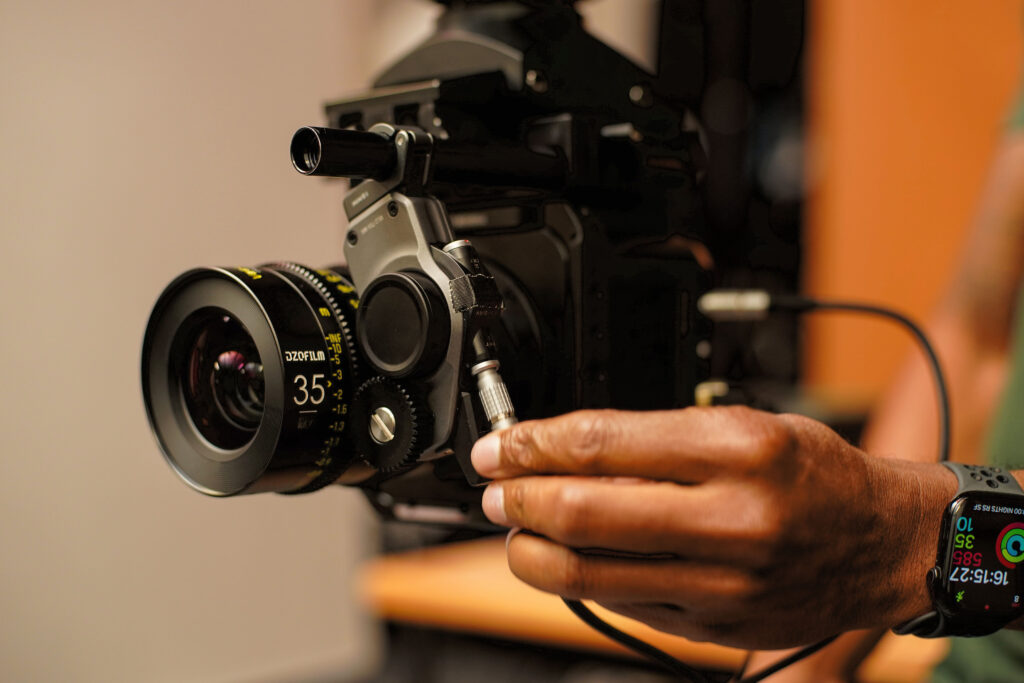
Focus, by contrast, was a non-issue: the integrated focus motor follows every programmed position of the robot move automatically, so focus is baked into the choreography, not chased on the lens.
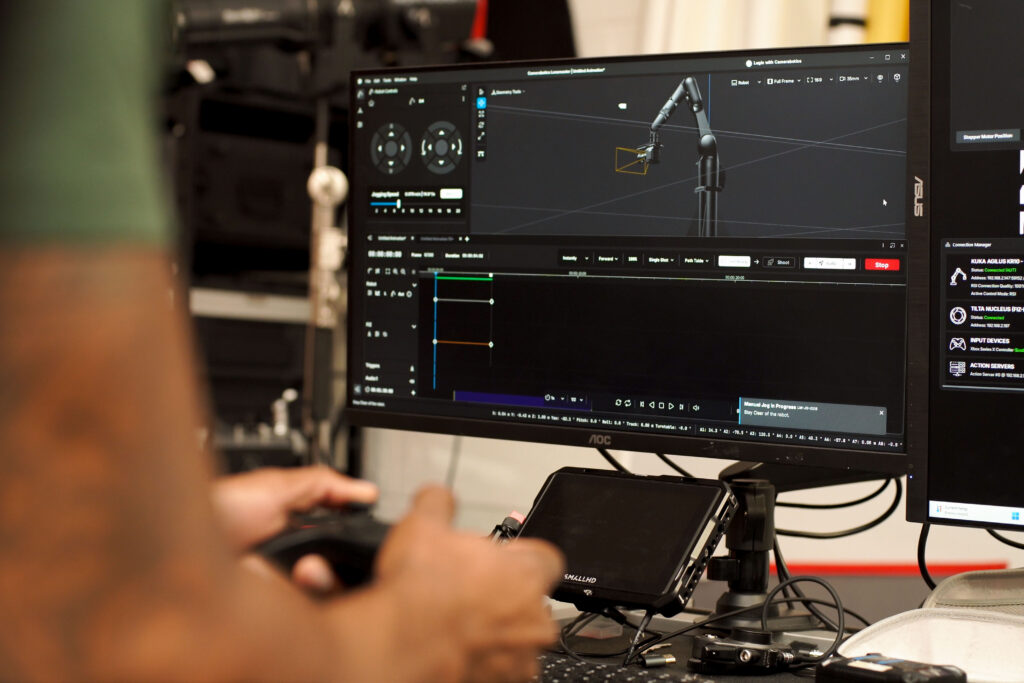
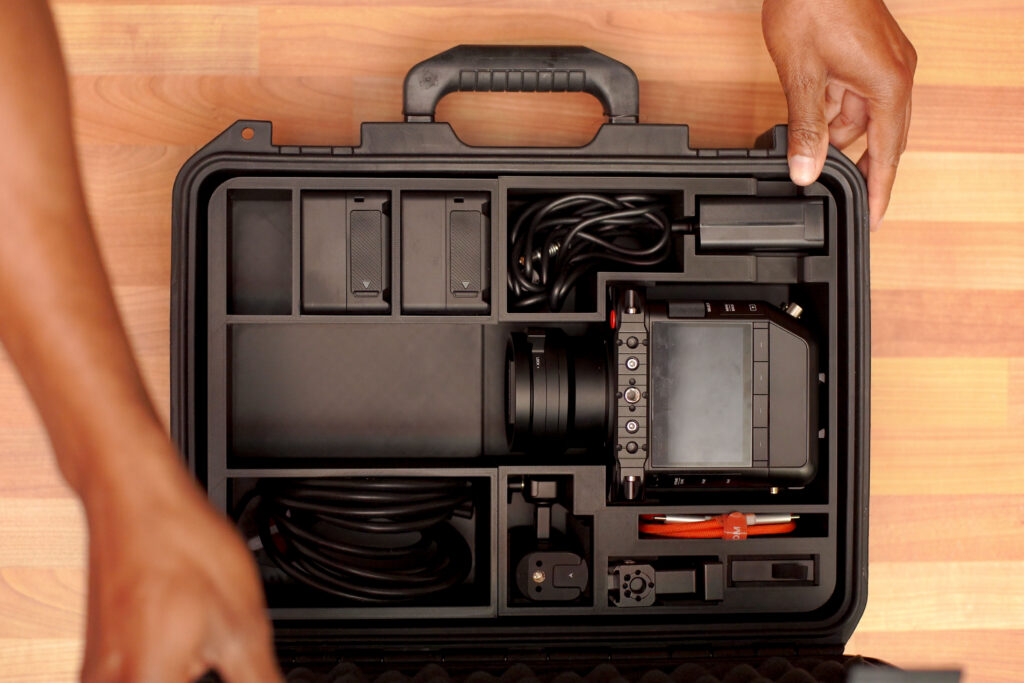
And then there’s the case. The shipping case, in his words, is fine for shipping — but not sturdy or roomy enough for a working filmmaker who hauls kit to set and, in his case, hires it out. So he reverse-engineered the core Spark accessories and 3D-printed his own carrying case, built around a Peli, with room for the battery gear, extra lenses and power cables he’d actually take on the road.
“When it goes out, I need it to be protected and have some sort of organisation.”
None of this reads as a complaint. It reads as a serious professional treating a tool as a platform — and quietly writing the accessory wishlist for the people who make it.
Is This You?
His story isn’t universal, and that’s the honest part. He hasn’t yet run Spark on a paid client job — he’s put it through repeated studio tests to build full confidence in the image before he stakes a client’s brief on it, which is exactly what a careful professional should do. If you want a case study with a finished campaign and a client logo, this isn’t that yet. It’s something arguably more useful: an experienced high-speed shooter, with a real point of comparison, telling you what changed.
If you’ve been running a 1080p high-speed camera and compromising your 4K deliverables, this is your story. If the Phantom has been your unreachable Holy Grail and the Chronos step-up left you cold, this is your story. If you shoot tabletop, product, or motion-control work where slow motion is the brief and not the bonus — and you’ve been waiting for something to appear on the market — he already waited for you.
And if you’re a motion-control operator specifically: know going in that wired triggering is a build-it-yourself job today and an on-the-roadmap feature tomorrow. He’d tell you that himself. He’d also send you the cable link. And if you want to see it on real jobs, some of Kirth’s motion-control rigs are here.


